Nutrition tools

FUEL YOUR PROGRESS.

Your calories, macros, meal ideas and progress timeline. Build a practical plan around your goal.

Your measurements

Find your starting point.

Adult estimates using the Mifflin–St Jeor equation. Activity, weight trends and your coach's assessment help refine them. This tool is not designed for fight-day weight cuts.

Estimated daily targets
2,760kcal / day
144gProtein576 kcal
353gCarbohydrates1410 kcal
86gFat774 kcal
Create a free account & save my plan

Protein: 1.8g/kg. Fat: approximately 28% of calories. Remaining calories: carbohydrates. Goal adjustment: −300 or +250 kcal/day. Values displayed are rounded.

Your nutrition playbook

FROM NUMBERS
TO YOUR NEXT MEAL.

A practical starting point for maintenance. Your inputs above update this plan.

2,760estimated kcal / dayMaintenance · 80 kg
01 / Put it on your plate

YOUR EXAMPLE DAY.

Simple meals. Real portions. Plenty of ways to make it yours.

This day's estimate2,764 kcalClose to your daily calorie target
Protein
144 / 144g
Carbs
353 / 353g
Fat
86 / 86g

Portions are adjusted towards your targets, within practical limits. Totals may differ: use them as a starting point, not an exact prescription. Nutrition values are representative estimates; brands, fibre and cooking methods change them. All listed ingredients are included in the totals.

01 / Breakfast5 min
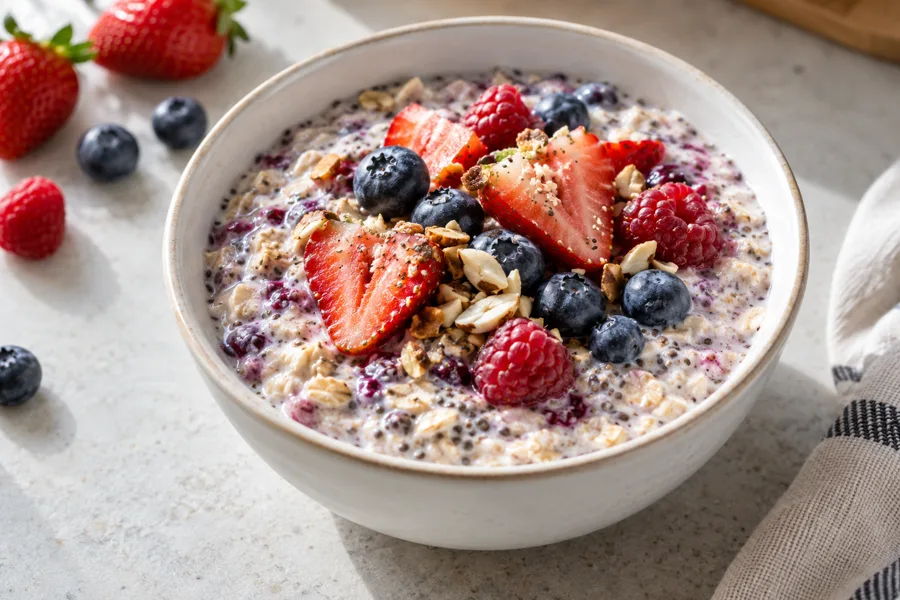
Berry overnight oats

Berry overnight oats

460 kcal
P 23gC 68gF 10g
Ingredients & recipe
  • 92g Rolled oats (dry)
  • 92g Plain 0% Greek yoghurt
  • 100g Mixed berries
  • 6g Almonds
  1. Stir the oats and yoghurt together with a splash of water. Cover and refrigerate overnight.
  2. Top with berries and chopped almonds. Add cinnamon if you like.
Seasonings, herbs, lemon and water may be added to taste. Calorie-containing sauces or extras need to be counted separately.
02 / Lunch25 min
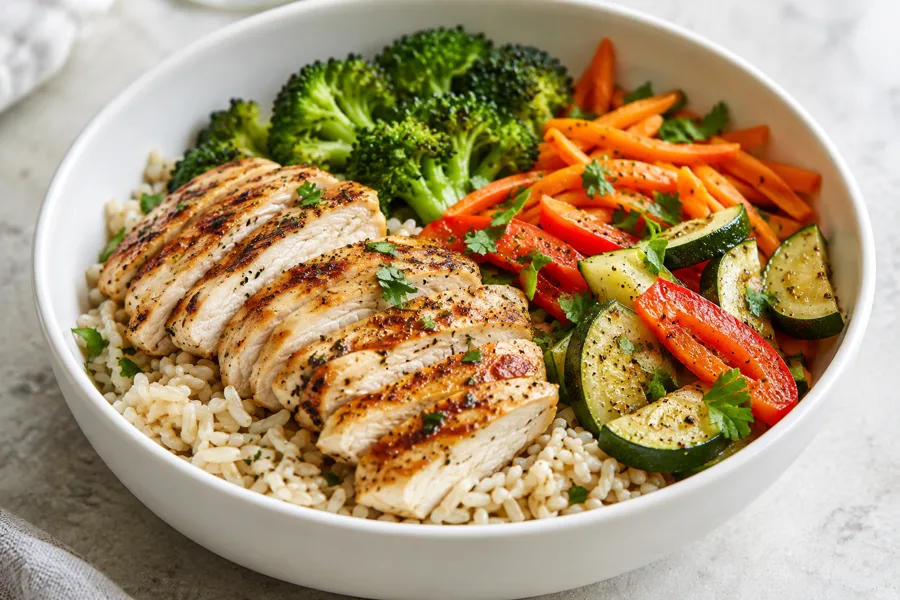
Chicken rice power bowl

Chicken rice power bowl

991 kcal
P 38gC 168gF 19g
Ingredients & recipe
  • 73g Chicken breast (raw)
  • 213g Brown rice (dry)
  • 200g Mixed vegetables
  • 10g Olive oil
  1. Cook the rice according to the packet. Steam or roast the vegetables.
  2. Dice the chicken and pan-fry in the measured oil until thoroughly cooked throughout.
  3. Build your bowl. Add lemon, pepper and herbs to taste.
Seasonings, herbs, lemon and water may be added to taste. Calorie-containing sauces or extras need to be counted separately.
03 / Dinner35 min
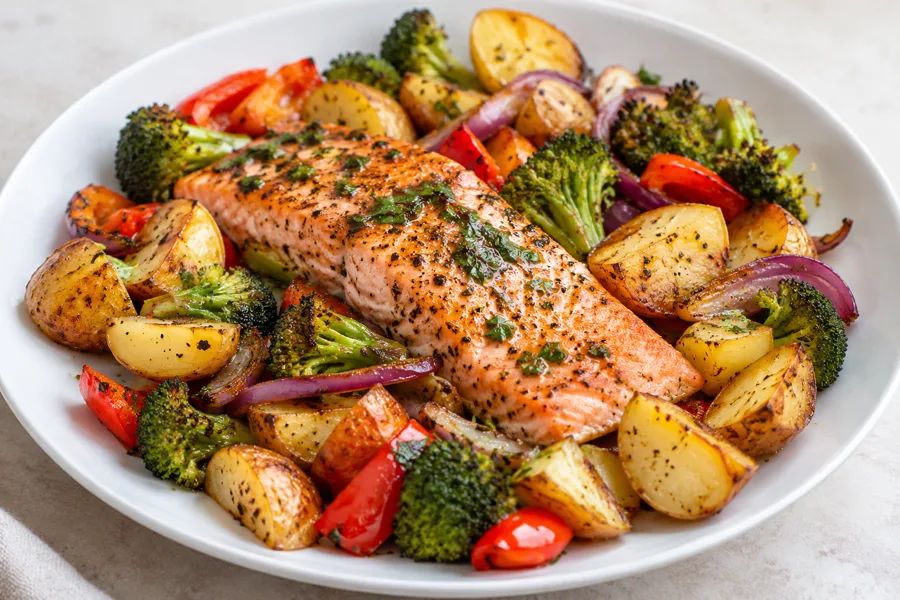
Salmon & potato traybake

Salmon & potato traybake

920 kcal
P 51gC 82gF 43g
Ingredients & recipe
  • 191g Salmon fillet (raw)
  • 423g Potatoes (raw)
  • 200g Mixed vegetables
  • 17g Olive oil
  1. Heat the oven to 200°C (180°C fan). Cut potatoes into small chunks, toss with the measured oil and roast for 15 minutes.
  2. Add your protein and vegetables. Roast until potatoes are tender and protein is thoroughly cooked.
  3. Season with lemon and herbs. Check cooking time for your oven and portion size.
Seasonings, herbs, lemon and water may be added to taste. Calorie-containing sauces or extras need to be counted separately.
04 / Snack3 min
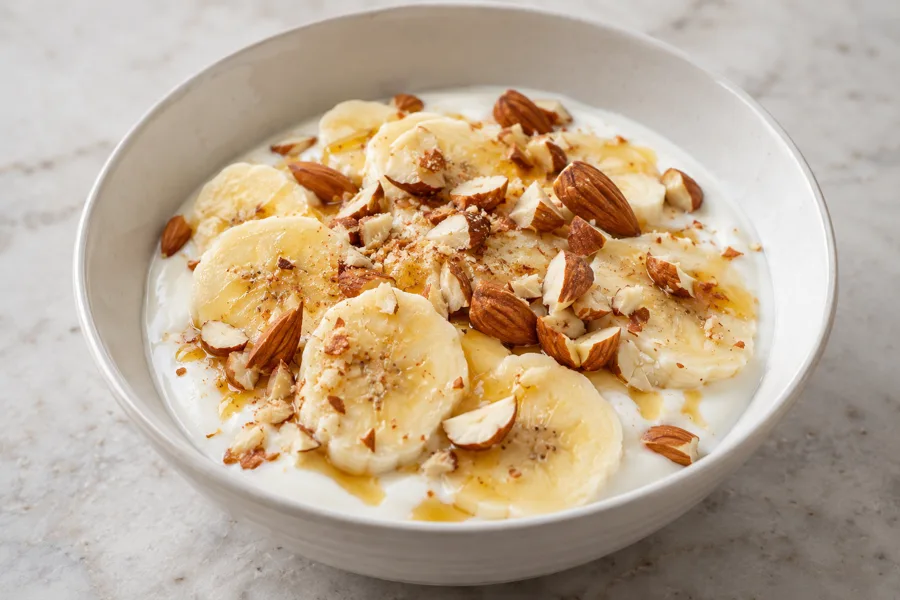
Yoghurt, banana & nut bowl

Yoghurt, banana & nut bowl

393 kcal
P 32gC 35gF 14g
Ingredients & recipe
  • 258g Plain 0% Greek yoghurt
  • 100g Banana (peeled)
  • 25g Almonds
  1. Spoon yoghurt into a bowl. Top with sliced banana and chopped nuts.
Seasonings, herbs, lemon and water may be added to taste. Calorie-containing sauces or extras need to be counted separately.

Your shopping list

For one person, one example day. Tap items as you get them.

Make it work for you

  • Cook once, use twice. Multiply the ingredients for extra portions. Refrigerate promptly, follow food storage guidance and cook proteins thoroughly.
  • Use the right weight. Weigh dry rice, pasta and oats before cooking. Meat, fish and potatoes use raw weights; beans, lentils and tofu use drained weights.
  • Swap with intention. Choose another example day for variety. Swapping a protein, milk or sauce changes the totals, so check the label.
  • Check allergens. This day includes: Oats; check gluten labelling; Milk; Nuts. Check every product label and avoid foods you are allergic to. These plans are not allergy-filtered.
02 / Explore the journey

PROGRESS TAKES TIME.

Maintain your weight while building fitness and skill.

Starting weight80.0 kg
Illustrative week 1280.0 kg
Initial estimated trend0.00 kg/wkApproximately stable
Illustrative weight timelineAt 2760 calories per day, the simplified model estimates 80.0 kilograms after 12 weeks. The shaded area compares twenty percent faster and slower changes; it is not a confidence interval.79.079.580.080.581.0Week 0Week 6Week 12
80.0 kgillustrative estimate

The shaded area shows 20% faster / slower model scenarios, not a guaranteed range. This simplified model keeps calorie intake and activity fixed, recalculates estimated expenditure as weight changes and uses an approximate 7,700 kcal/kg conversion. It cannot predict muscle gain, water changes, adherence or individual metabolic adaptation. It is not the NIH Body Weight Planner. Review your real trend every 2–3 weeks; do not reduce calories to chase a deadline.

View the weekly estimates as a table
WeekCentral estimateSlower / faster scenarios
080.0 kg80.0–80.0 kg
180.0 kg80.0–80.0 kg
280.0 kg80.0–80.0 kg
380.0 kg80.0–80.0 kg
480.0 kg80.0–80.0 kg
580.0 kg80.0–80.0 kg
680.0 kg80.0–80.0 kg
780.0 kg80.0–80.0 kg
880.0 kg80.0–80.0 kg
980.0 kg80.0–80.0 kg
1080.0 kg80.0–80.0 kg
1180.0 kg80.0–80.0 kg
1280.0 kg80.0–80.0 kg
03 / Build the habits

CONSISTENCY WINS.

Small routines that help the plan fit your life.

01

Find your sustainable rhythm

Keep meals and activity broadly consistent. A small day-to-day weight change is normal and does not mean your diet needs changing.

02

Fuel the session

Have a familiar carbohydrate-containing meal or snack before training if needed. A normal meal afterwards can support recovery.

03

Track more than weight

Look at energy, strength, boxing performance and how you feel. Weight change is optional; skill and fitness can improve at a stable weight.

The daily foundations

  • Include a protein source at each meal, and vary your foods across the week.
  • Aim for at least five portions of fruit and vegetables each day. Choose wholegrain options when they suit you.
  • Drink regularly. The NHS general guide is 6–8 cups or glasses daily; exercise and hot weather can increase needs.
  • Keep sleep, recovery and activity consistent. Macros do not measure the full quality of a diet.

Your 2–3 week check-in

  1. Track energy, hunger, recovery and training performance. If weighing yourself is helpful, use consistent conditions and compare weekly averages.
  2. Check portions and consistency before changing the plan. Water, sodium and digestion can move the scale.
  3. Review with your coach if the trend differs from your goal, or if you feel persistently tired, dizzy or under-fuelled.

General guidance for adults aged 18+. For pregnancy, breastfeeding, medical conditions, an eating disorder or a prescribed diet, get individual advice from a clinician or registered dietitian. This planner is not for boxing weight cuts.

A coach in your corner

Make the plan personal.

Get nutrition guidance alongside boxing coaching, progress tracking and ongoing support.

Talk to Reece
Make time for yourself

Your next chapter starts at home.

Tell Reece what you want to achieve. Build a plan around your life.

Arrange your starter session